PROTECTED GRASS THRIVES
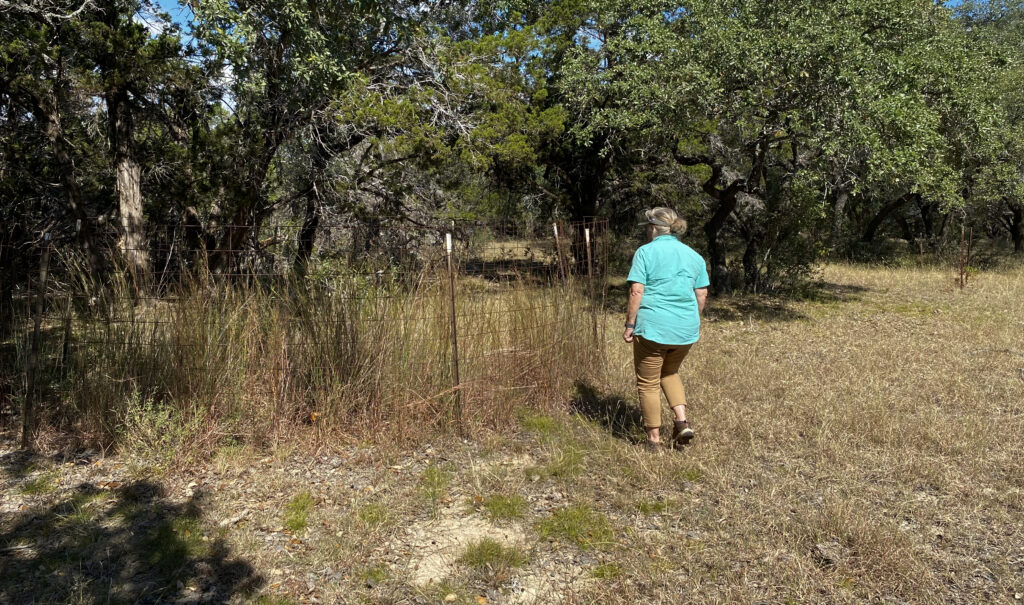
When touring a north Hays County ranch, we discovered a few plots on a dry hill that had been fenced off years ago. The intent had been to protect newly planted native trees, but the unintended result has been a lush growth of mostly Little Bluestem grass. The lushness directly contrasts the unprotected weak, sparse grass cover outside the fence.
So, why is the fenced grass so robust? Because the ranch’s livestock can’t graze those grasses.
When protected from nonstop grazing, native grasses can flourish, even where they receive the same rain as unprotected grass cover. When landowners don’t keep their livestock moving, the animals continuously graze the same grasses again and again. Native prairie grasses such as Little Bluestem cannot handle being grazed or mowed more than 2-3 times a year. It depletes their energy reserves, producing scrawny tufts that barely constitute as grass cover. For this reason, it is imperative to keep livestock moving.
The more native grasses flourish, the healthier soil becomes, making it easier for the grasses to form a dense cover and to withstand drought.
Next month’s newsletter will provide an update from one of our team members, Julie Lewey, and the work she’s doing to manage her livestock on her Uvalde ranch using virtual fencing.
D•MAP WEBSITE HOME PAGE PEEK-SNEAK
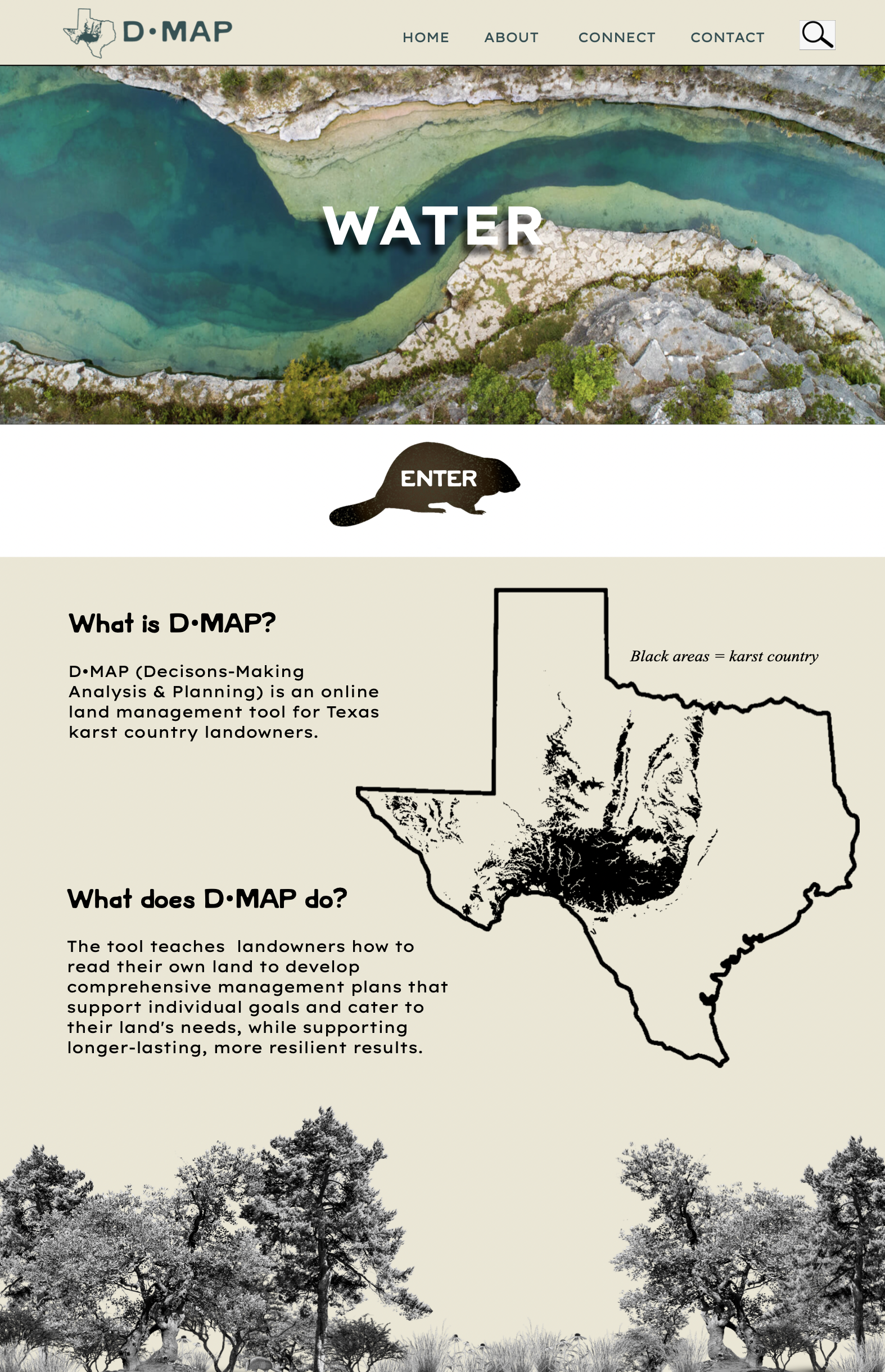
We’re excited to announce that, after almost a year of work, our webmaster will begin uploading the new D•MAP website pages. D•MAP will serve as an online tool to help karst country landowners create a 10-year management plan that supports their goals, budget, and interests.
Initially, the pages will be for our team’s eyes only as we work out the wrinkles. Once we’re ready, we will use lands of different sizes and locations to beta-test the process and train regional master naturalists to assist landowners.