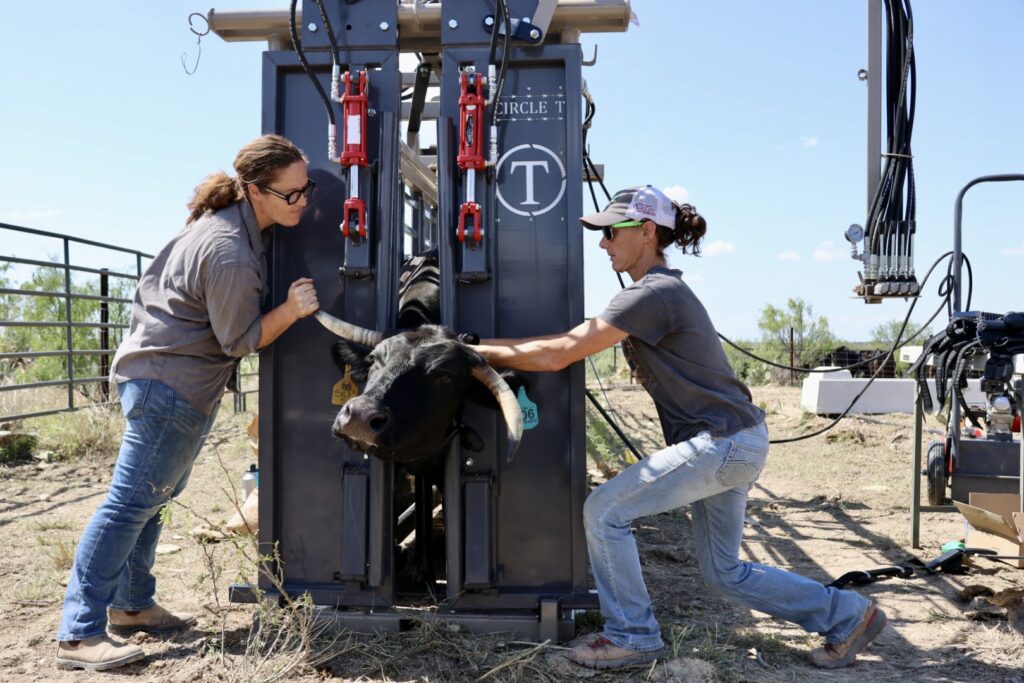
Photo: Julie Lewey (left) adding a smart collar to one of her cattle
Virtual Fencing for Managed Grazing
Excessive overgrazing and clearcutting that began in the 1860s and continues today has degraded many Edwards Plateau soils.
Overgrazing mostly began when the open range was fenced in. Before fencing, livestock and bison were constantly on the move, due to predators, the need to find fresh forage, or livestock herding by cowboys. The movement created a beneficial graze-rest cycle:
- Grasses were grazed briefly
- Herds moved on
- Grasses had time to recover
With fencing, most livestock were allowed to repeatedly graze their favorite plants, leading to extreme overgrazing that led to decline of roots systems, exposed soil, reduced rain infiltration, and erosion.
To avoid overgrazing, livestock MUST be managed. We do this by putting the “cowboy” back on the land.
Managed grazing typically begins with breaking rangeland into smaller sections. These breaks are defined with high-tensile electric wire, poly wire/tape, and portable posts. Our problem in Texas karst country is that most of our soils are less than six inches deep. Adding more fence posts, even if they’re not as deep as perimeter fencing, is incredibly laborious.
The easier solution is virtual fencing. Electric collars are placed around the necks of adult livestock using a chute. Remote apps then track the livestock and guide them into new pastures—without installing a fence or always going out on the range.
Julie Lewey, a south-central Edwards Plateau rancher and a Project Bedrock team member, has been using virtual fencing for almost a year. She reports that although there have been some bumps along the way, she’s very pleased with the technology. Laughing, Julie said, “It took us longer to figure it out than the cows.” The most challenging time of the year is during calving season. She said it’s important to create bigger paddocks and make slower moves.
Julie says managed grazing allows the cattle to “lick the top off the ice cream and stay away from the cone” before moving on to the next pasture. This keeps the grasses healthy. Julie stressed that managed grazing helps to “manage for what you WANT…not for what you don’t want. That’s the key.” To promote the benefits of managed grazing, the La Cuna Art Center sponsored an art project that showcases Julie’s comprehensive approach to regenerative ranching.
Potential funding sources are the Texas Nature Conservancy, EQIP , and PERC.
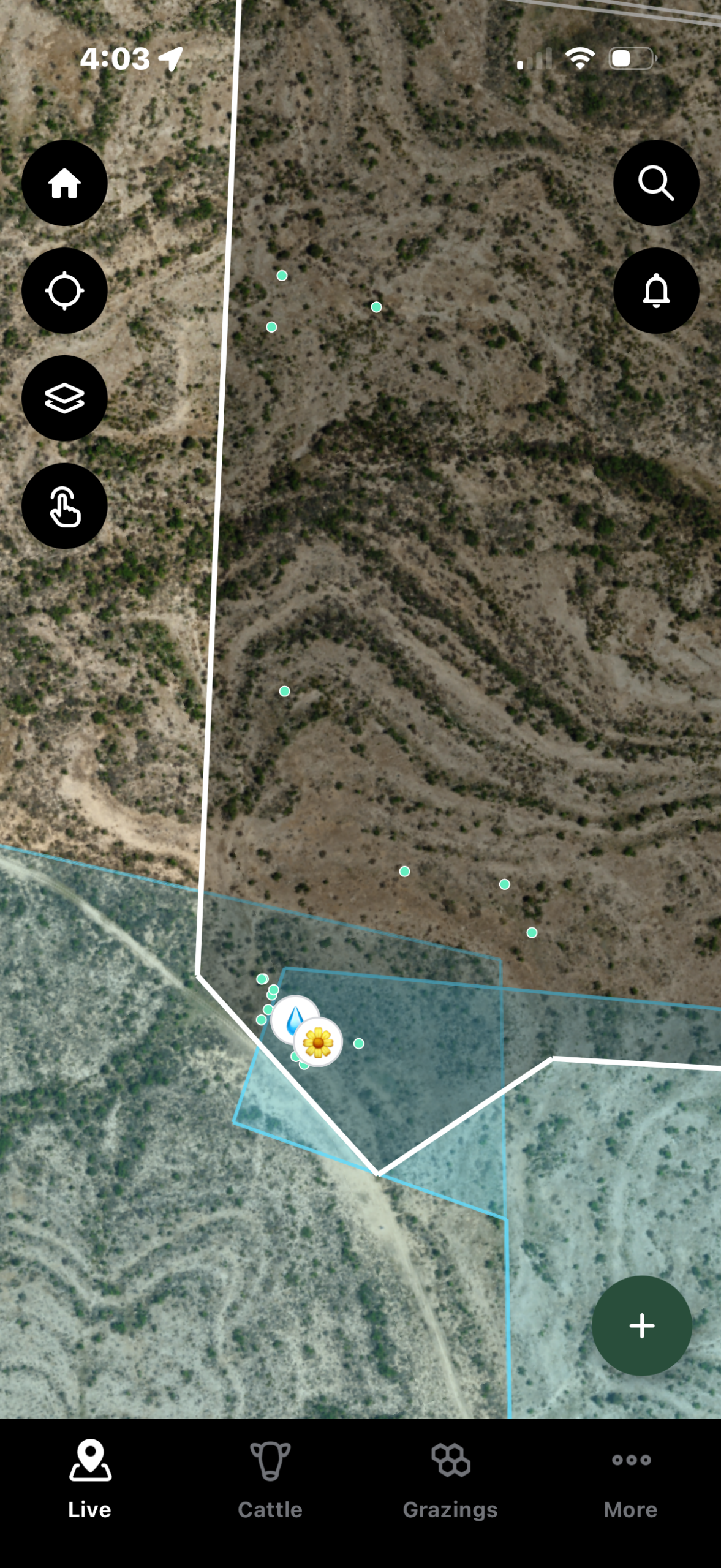
The image below shows a satellite view of part of Julie’s land. The blue dots indicate individual cattle locations. It’s like a live “air traffic control” map—but for cattle instead of planes.